The Color Book:
A dance narrative about Colorism from the African American Female Perspective
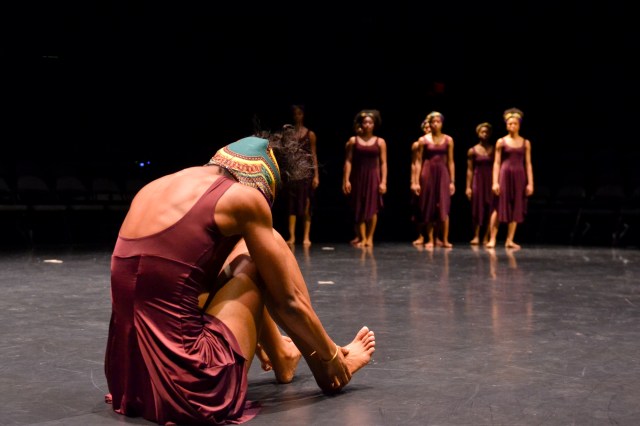 The Color Book made its debut in the Senior Concert, March 6th – 8th, 2019 in the Barnett Theatre at the Ohio State University. It is a two-part dance narrative about colorism from the African American female perspective. The first section that I performed in is entitled Foreword. It is a three-minute solo performed to a live spoken word artist. The second section, entitled Chapter One, is a six-minute work performed by the ensemble. The Color Book identifies the stereotypes associated with skin color on the black spectrum to celebrate black female life through dance. Upon its completion, The Color Book attempted to reconstruct the image of Black women in dance by understanding their existence and reclaiming their identity.
The Color Book achieved the following goals: 1) define the term colorism, 2) describe how colorism affected the African American community, 3) inform individuals in the Black dance community of the hidden rhetoric used by the black community towards race, color, and identity, and 4) educated, uplifted, and empowered women of all shades through celebration of Black life.
Description of Research
My research for The Color Book depended heavy on the information I learned in academic coursework, personal experiences, and dancer’s personal narratives. The research focused on theories of colorism that includes passing ideology, oppressive racial systems, the sub-optimal/optimal conceptual theory, and the Willie Lynch theory. I also worked with the dancers to dissect their own identity to create movement and choreographic motifs. In terms of movement generation, the dancers created solos which unveiled their own experience with race. I also introduced African concepts lost within today’s American society throughout the work. With my knowledge from an African Civilization class I took, I incorporated concepts of African royalty, clothing, and community. I also utilized African movement patterns like “the circle” and sacred washing of the performance space to generate a loving, unified, and supporting community. By the completion of The Color Book, I learned more about my own identity, which I struggled with for years. Additionally, I learned that some dancers agreed with the overall goal of this work, but others did not. I realized throughout the process that identity is complicated because some of my dancers walked away feeling even more confused with their identity.
Afterword/Conclusion
Colorism shaped Black societies because Black people have little to no knowledge of its existence. The Color Book has not only educated the dancers and community on a system affecting them but has allowed them to look at their own situations and reflect on how they have been affected. No matter the color, people do not talk about problems of race because it is complicated and systematic. But to make change, society must educate itself on the tribulations that stop a community from growing. We, as black people, cannot be pushed down anymore, especially by our own people. We all have a different story, but it overlaps when we come together as one. The Color Book provided my dancers with a space to explore their identities. I disrupted color hierarchies by allowing all dancers a moment to shine regardless of who society believed should be showcased. And I also informed people on Black female life through joy!
This work was also presented at the Denman Research Forum at The Ohio State Univerisity in March 2019. I came in 2nd place behind another dance major within our category! Here is the poster that I used:

 Brianna Rhodes